
Claude Code - Granular Cost Tracking
Track Claude Code usage by customer or tags using LiteLLM proxy. This enables granular cost attribution for billing, budgeting, and analytics.
Overview
Claude Code - Granular Cost Tracking
Track Claude Code usage by customer or tags using LiteLLM proxy. This enables granular cost attribution for billing, budgeting, and analytics.
How It Works
Claude Code supports custom headers via ANTHROPIC_CUSTOM_HEADERS. LiteLLM automatically tracks requests with specific headers for cost attribution.
Tracking Options
Choose how you want to attribute costs:
| Track By | Header | Use Case |
|---|---|---|
| Customer | x-litellm-customer-id | Bill customers, per-user budgets |
| Tags | x-litellm-tags | Project tracking, cost centers, environments |
Environment Variables
| Variable | Description | Example |
|---|---|---|
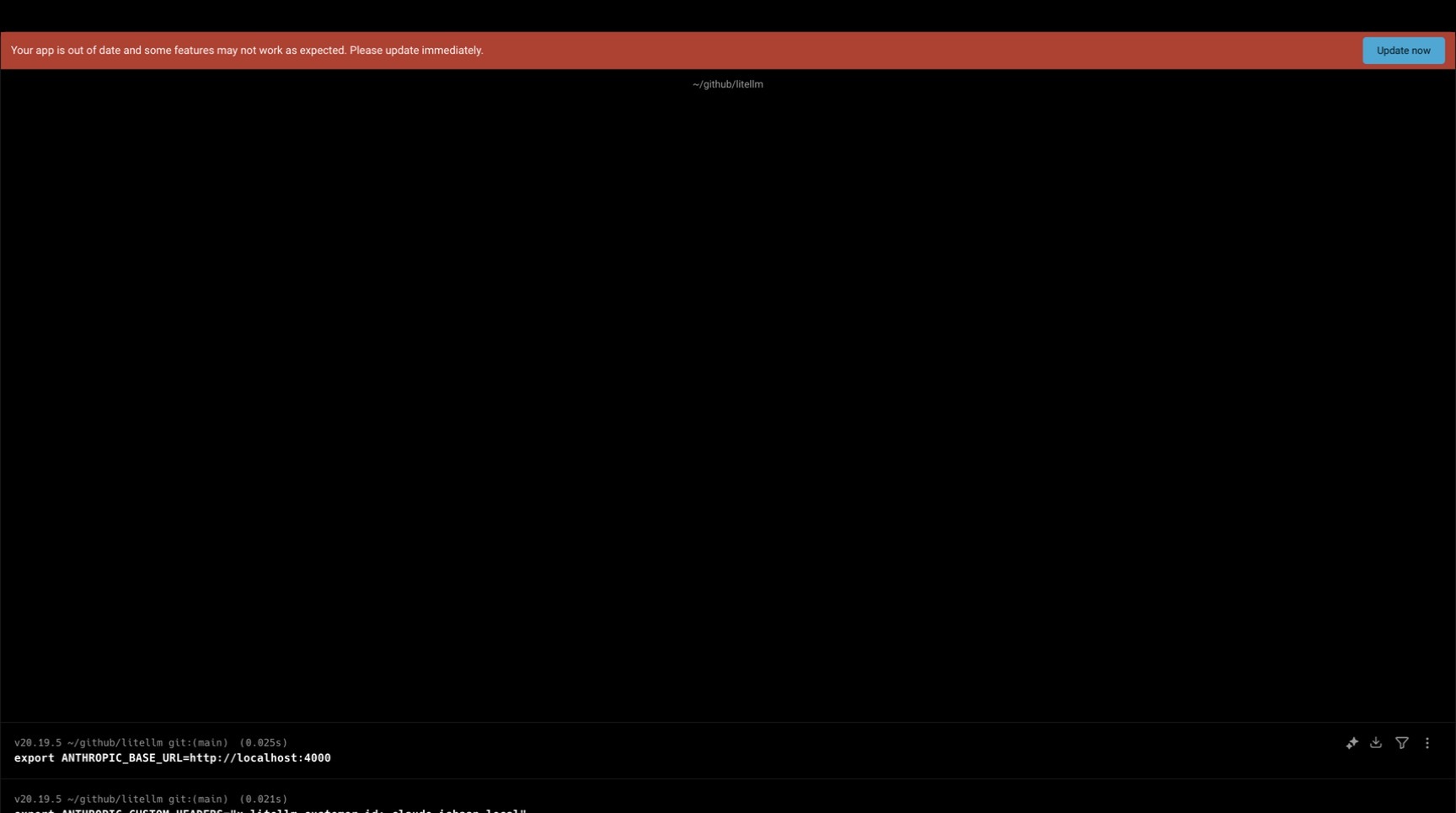
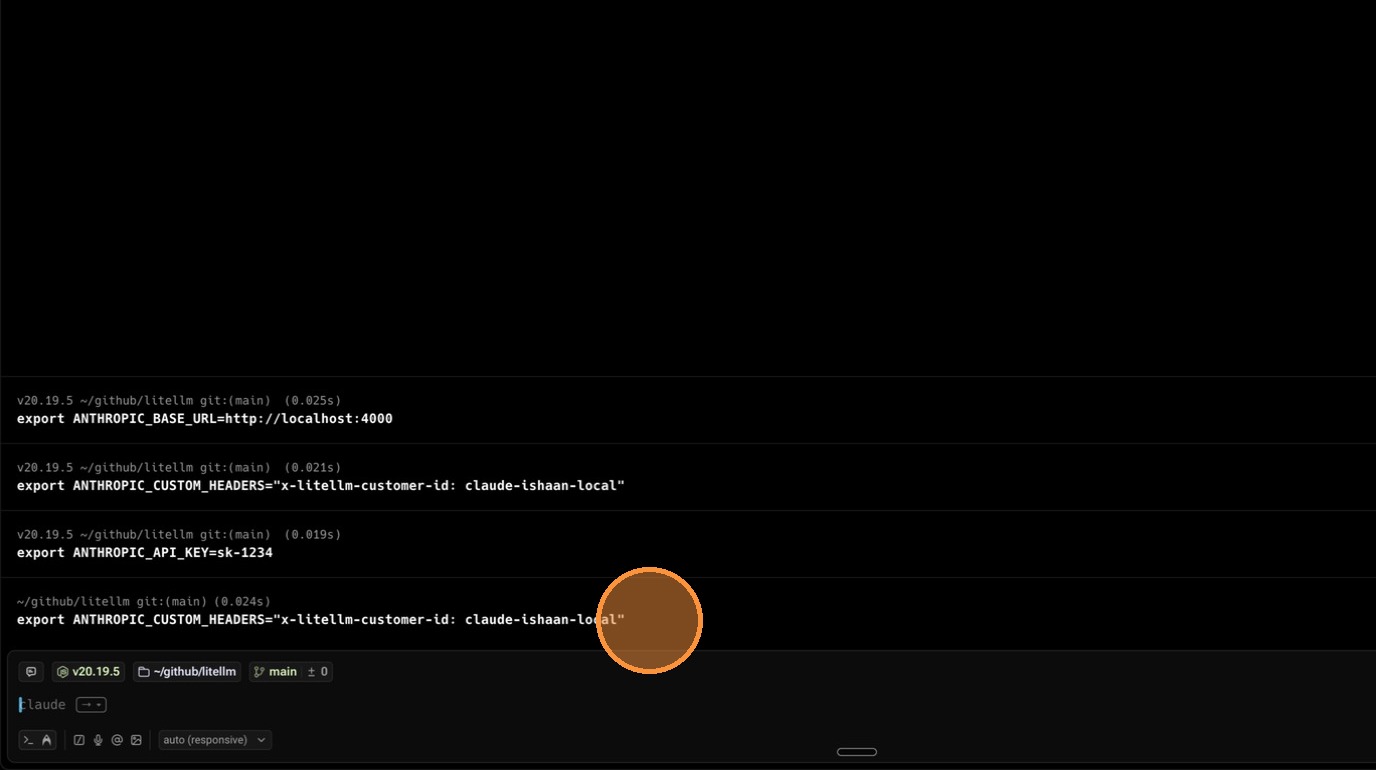
ANTHROPIC_BASE_URL | LiteLLM proxy URL | http://localhost:4000 |
ANTHROPIC_API_KEY | LiteLLM API key | sk-1234 |
ANTHROPIC_CUSTOM_HEADERS | Custom headers (header-name: value format) | See examples below |
Option 1: Track by Customer
Use this to attribute costs to specific customers or end-users.
Option 2: Track by Tags
Use this to attribute costs to projects, cost centers, or environments. Pass comma-separated tags.
Quick Start
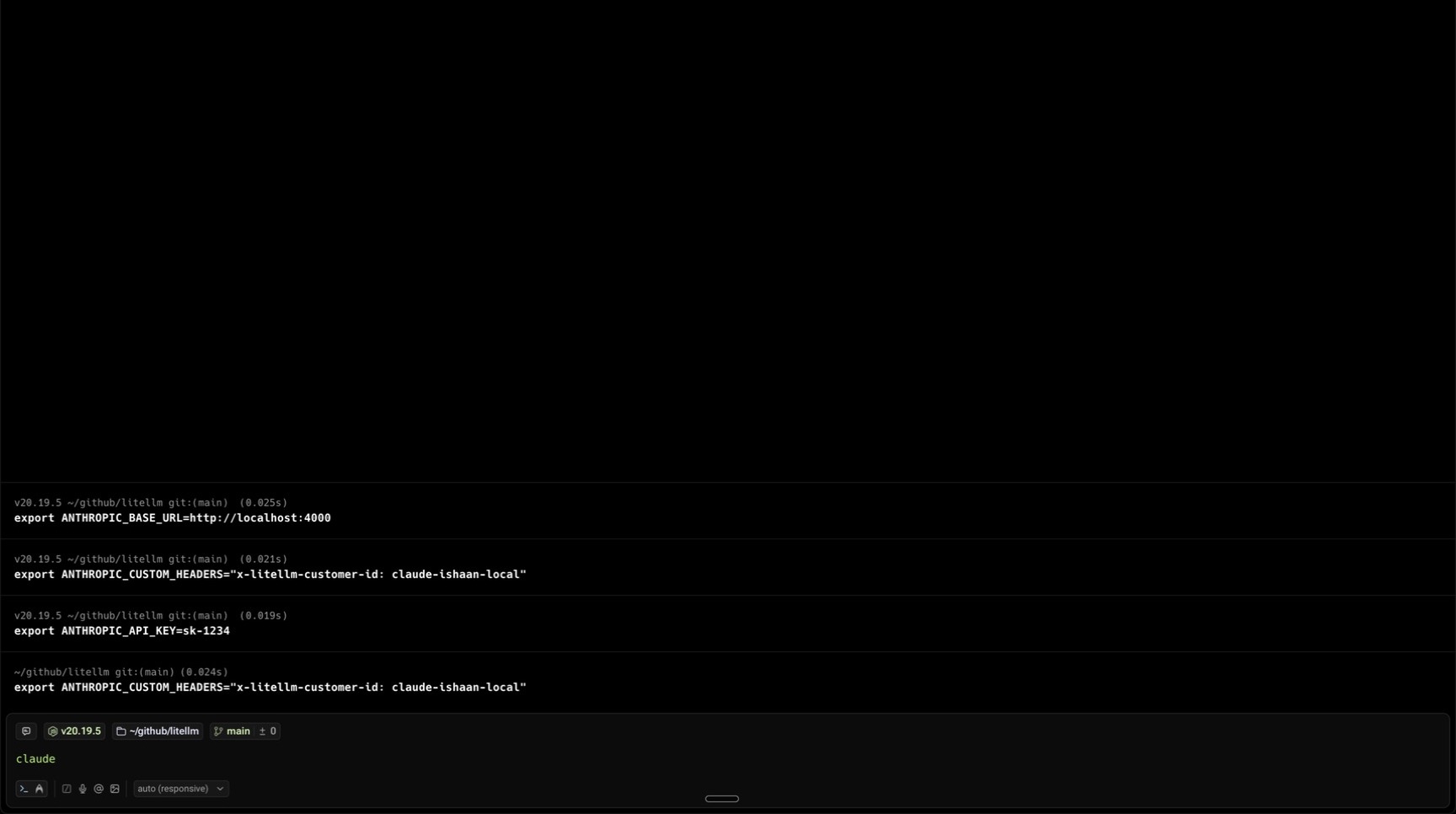
1. Set Environment Variables
2. Use Claude Code
claude
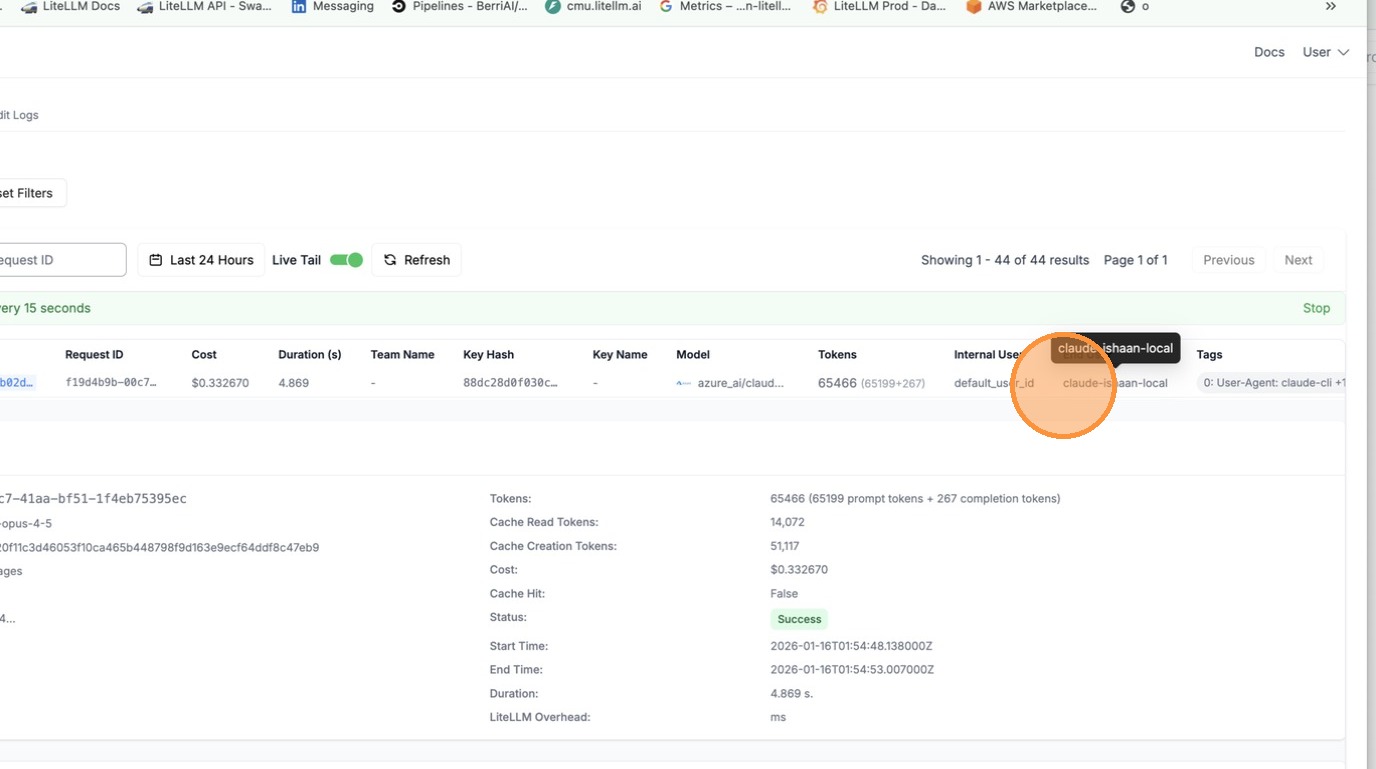
All requests will now be tracked under the customer ID claude-ishaan-local.
3. View Usage in LiteLLM UI
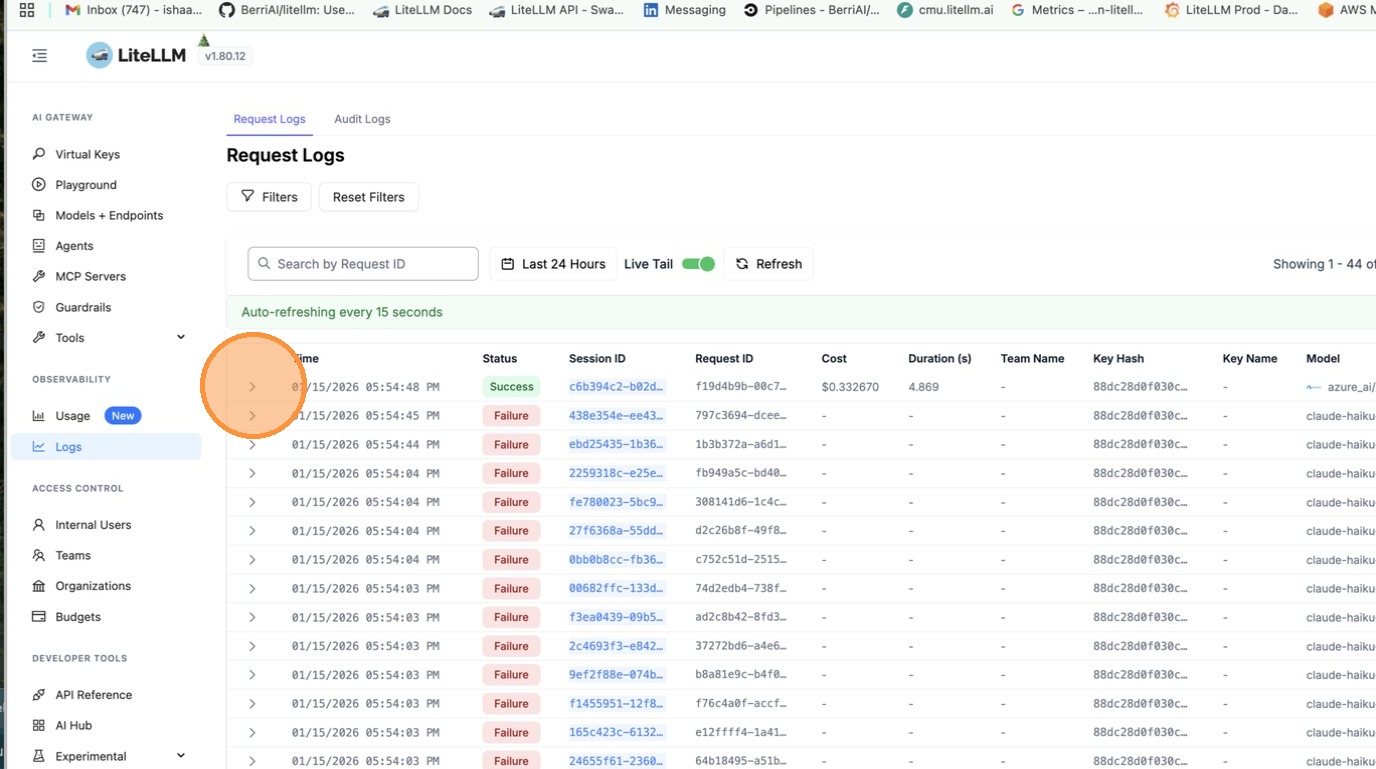
Navigate to the Logs tab in the LiteLLM UI.
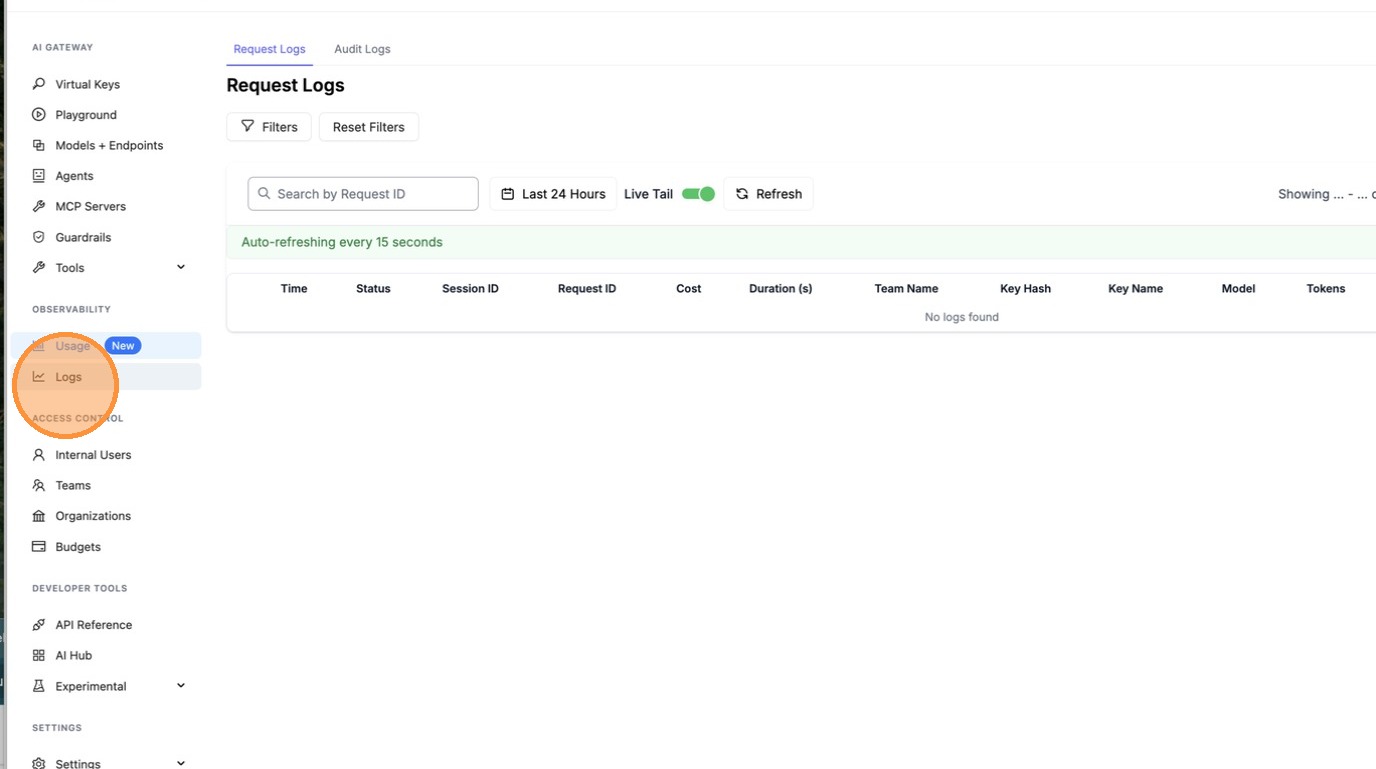
Click on a request to see details.
Filter by customer ID to see all requests for that customer.
Supported Headers
| Header | Description |
|---|---|
x-litellm-customer-id | Track by customer/end-user ID |
x-litellm-end-user-id | Alternative customer ID header |
x-litellm-tags | Comma-separated tags for cost attribution |